Attic Insulation Cost in 2026: What You’ll Actually Pay
Attic insulation costs $1.50 to $3.50 per square foot installed in 2026, putting the total for a typical 1,000-1,500 sq ft attic between $1,500 and $5,250. The national average sits around $2,500 for blown-in fiberglass or cellulose at R-38 — the minimum recommended value for most US climate zones. Spray foam runs higher at $3.00 to $7.00 per square foot but delivers superior air sealing.
Key Takeaways
- Average total cost: $1,500–$5,250 for a standard 1,000–1,500 sq ft attic with blown-in insulation
- Cost per square foot: $1.50–$3.50 for blown-in (fiberglass or cellulose); $3.00–$7.00 for spray foam
- Energy savings: 15–25% on heating and cooling bills, recouping the investment in 2–4 years
- R-value targets: R-38 minimum for most zones; R-49 to R-60 recommended for cold climates (zones 4–8)
- DIY option: Blown-in insulation machines rent for $50–$100/day from Home Depot and Lowe’s, cutting costs by 40–60%
What’s in This Guide
- Attic Insulation Cost by Type
- Cost by Home Size
- Factors That Affect Your Cost
- Understanding R-Value Requirements
- Insulation Removal and Replacement Costs
- DIY vs. Professional Installation
- Energy Savings and ROI
- Signs You Need New Attic Insulation
- How to Hire an Insulation Contractor
- Frequently Asked Questions
Attic Insulation Cost by Type
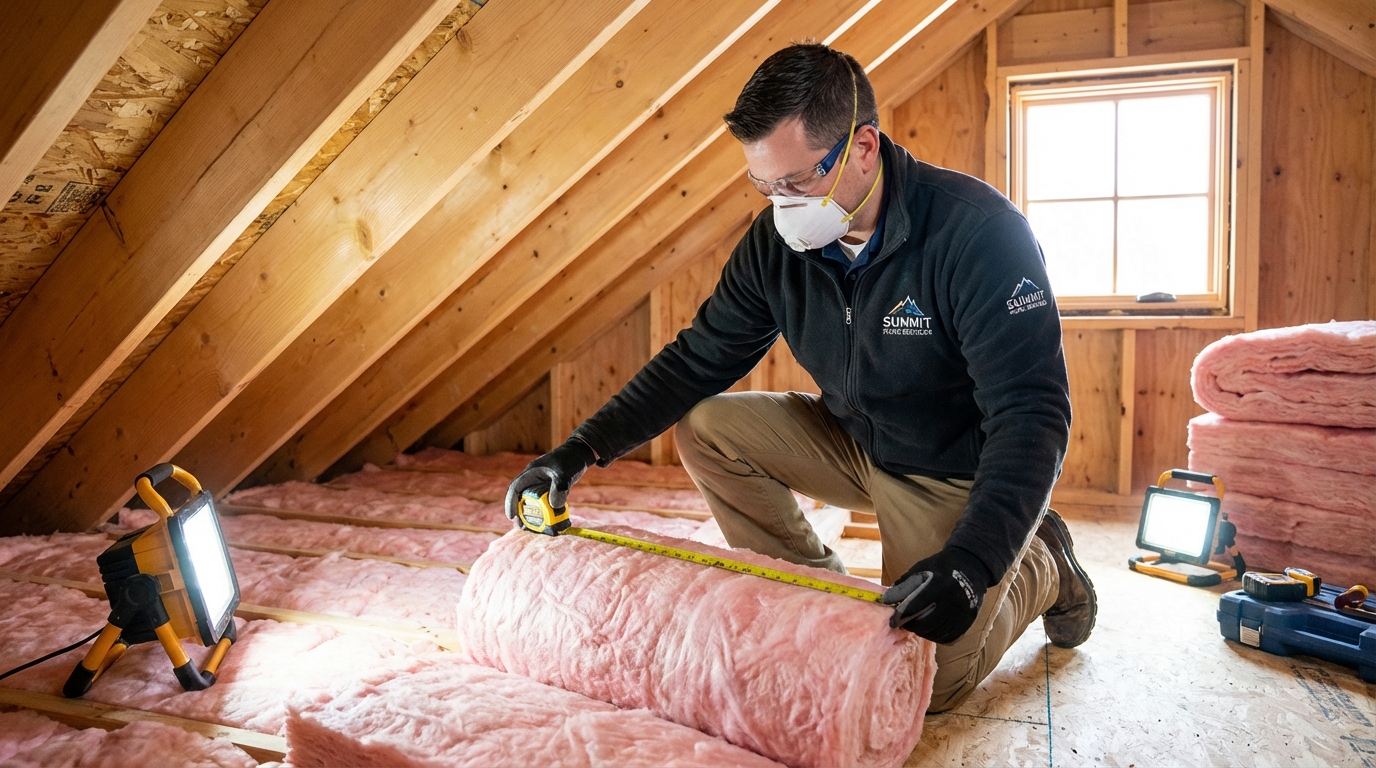
The insulation material you choose drives most of the price difference. Blown-in fiberglass and cellulose are the workhorses of attic insulation — they’re affordable, effective, and fast to install. Spray foam costs 2–3x more but handles air sealing and insulation in one step. Batt insulation (the pink rolls you see at Home Depot) works for open attic floors but can’t match blown-in coverage around obstacles like wiring and ductwork.
| Insulation Type | Cost per Sq Ft (Installed) | R-Value per Inch | Total for 1,200 Sq Ft Attic | Best For |
|---|---|---|---|---|
| Blown-In Fiberglass | $1.50–$2.50 | R-2.2 to R-2.7 | $1,800–$3,000 | Budget-friendly, DIY-able |
| Blown-In Cellulose | $1.50–$2.80 | R-3.2 to R-3.8 | $1,800–$3,360 | Higher R-value per inch, eco-friendly (recycled paper) |
| Fiberglass Batts | $1.00–$2.00 | R-2.9 to R-3.8 | $1,200–$2,400 | Open joist bays, easy DIY |
| Open-Cell Spray Foam | $3.00–$5.00 | R-3.5 to R-3.7 | $3,600–$6,000 | Air sealing + insulation in one step |
| Closed-Cell Spray Foam | $5.00–$7.00 | R-6.0 to R-7.0 | $6,000–$8,400 | Maximum R-value, moisture barrier, structural support |
| Radiant Barrier | $0.75–$1.50 | N/A (reflects heat) | $900–$1,800 | Hot climates (zones 1–3), used WITH insulation |
Attic Insulation Cost by Home Size
Your attic’s square footage is the single biggest cost factor. Most contractors quote by the square foot, but you’ll also see quotes for the entire job. Here’s what to expect based on home size (assuming blown-in fiberglass or cellulose to R-38):
| Home Size (Sq Ft) | Approx. Attic Size | Blown-In Cost | Spray Foam Cost |
|---|---|---|---|
| 1,000 sq ft | 800–1,000 sq ft | $1,200–$2,500 | $2,400–$5,000 |
| 1,500 sq ft | 1,200–1,500 sq ft | $1,800–$3,750 | $3,600–$7,500 |
| 2,000 sq ft | 1,600–2,000 sq ft | $2,400–$5,000 | $4,800–$10,000 |
| 2,500 sq ft | 2,000–2,500 sq ft | $3,000–$6,250 | $6,000–$12,500 |
| 3,000 sq ft | 2,400–3,000 sq ft | $3,600–$7,500 | $7,200–$15,000 |
Factors That Affect Your Attic Insulation Cost
Insulation Material
Already covered above, but the material choice creates a 2–5x cost difference. Blown-in fiberglass is cheapest at $1.50/sq ft; closed-cell spray foam tops out at $7.00/sq ft. Most residential attics use blown-in products because they fill irregular spaces and cover obstacles more completely than batts.
Target R-Value and Thickness
The Department of Energy’s recommended R-values vary by climate zone. Higher R-values require more material, which means higher costs. Going from R-38 to R-60 typically adds 30–50% to your total material cost.
| Climate Zone | States (Examples) | Recommended R-Value | Blown-In Depth Needed |
|---|---|---|---|
| Zone 1–2 (Hot) | FL, TX (south), AZ, HI | R-30 to R-38 | 10–13 inches |
| Zone 3 (Warm) | GA, NC, TN, TX (north), CA (south) | R-38 to R-49 | 13–17 inches |
| Zone 4 (Mixed) | VA, KY, MO, NJ, NM, CA (north) | R-49 to R-60 | 17–20 inches |
| Zone 5–8 (Cold) | NY, MA, CO, OH, IL, MN, WI, MT | R-49 to R-60 | 17–20 inches |
Attic Accessibility and Condition
Contractors charge more for difficult attic access. A pull-down staircase with 4+ feet of headroom is standard. If your attic requires crawling, has limited access points, or has low clearance, expect a 15–25% surcharge. Attics with existing HVAC ductwork, plumbing, or electrical require more careful installation — the installer has to work around obstacles, which adds labor time.
Air Sealing (Often Required Before Insulation)
Here’s something many cost guides skip: insulation alone won’t solve your energy problems if your attic has air leaks. Gaps around recessed lights, plumbing vents, electrical boxes, and the attic hatch let conditioned air escape regardless of insulation depth. Professional air sealing costs $350–$1,000 and is done before insulation goes in. Many contractors include basic air sealing in their insulation quotes — always ask.
Existing Insulation Removal
If your current insulation is water-damaged, pest-contaminated, or contains vermiculite (which may have asbestos), it needs to come out first. Attic insulation removal costs $1.00–$2.50 per square foot, adding $1,000–$3,750 for a 1,500 sq ft attic. Removal and replacement together typically runs $3.00–$5.50 per square foot total.
Regional Labor Rates
Insulation costs vary by 20–40% between regions. The Northeast and West Coast run highest; the South and Midwest tend to be lower. A $2,500 job in Atlanta might cost $3,500 in Boston or $3,800 in San Francisco.
Understanding R-Value: How Much Insulation Do You Need?
R-value measures thermal resistance — how well insulation resists heat flow. Higher R-value = better insulation. But there’s a point of diminishing returns. Going from R-19 to R-38 cuts heat loss nearly in half. Going from R-38 to R-60 only reduces it by another 10–15%. For most homes, R-38 to R-49 is the economic sweet spot.
If your attic currently has some insulation (say R-19 from original construction), you don’t have to remove it. You can add blown-in on top to reach your target. Adding R-19 on top of existing R-19 gets you to R-38 at roughly half the cost of a full installation.
Attic Insulation Removal and Replacement Costs
Removing old attic insulation adds $1.00–$2.50 per square foot to your project. You’ll need removal if your existing insulation is damaged by water leaks or ice dams, contaminated by rodent droppings or nesting, compressed and no longer performing (old fiberglass batts lose loft over time), or contains vermiculite from the Libby, Montana mine (potential asbestos — requires professional abatement at $8–$15/sq ft).
For a 1,500 sq ft attic, here’s how removal and replacement costs break down:
| Service | Cost Range (1,500 sq ft) |
|---|---|
| Removal only (standard) | $1,500–$3,750 |
| Removal + new blown-in insulation | $3,750–$7,500 |
| Removal + attic cleaning/sanitizing | $2,250–$5,250 |
| Vermiculite/asbestos abatement + replacement | $12,000–$22,500+ |
DIY vs. Professional Attic Insulation
Blown-in insulation is one of the more DIY-friendly home improvement projects. Home Depot and Lowe’s rent blowing machines for $50–$100 per day (often free with a minimum material purchase of 20+ bags). Two people can insulate a 1,500 sq ft attic in 4–6 hours.
DIY Cost Breakdown
Materials for blown-in fiberglass to R-38 in a 1,500 sq ft attic run $700–$1,200 (roughly 25–35 bags at $30–$40 each). Add $50 for the blower rental and $50–$100 for safety gear (N95 respirator, safety goggles, gloves, long sleeves). Total DIY cost: $800–$1,350 — roughly 40–60% less than professional installation.
When DIY Makes Sense
Adding blown-in insulation to an open attic floor with no existing problems. The attic is accessible with good headroom. You have a helper (one person feeds bags into the hopper while the other directs the hose).
When to Hire a Professional
Spray foam requires specialized equipment and training — it’s never a DIY job. Same goes for attics needing air sealing around can lights or HVAC penetrations, insulation removal (especially rodent-contaminated or water-damaged material), attics with limited access or safety concerns, and any situation involving potential asbestos. Professional installation also comes with a warranty (typically 10–25 years) that DIY work doesn’t.
Browse insulation contractors in our directory to compare rated professionals in your area.
Energy Savings and ROI: Is Attic Insulation Worth It?
Attic insulation is one of the highest-ROI home improvements you can make. The Department of Energy estimates that proper attic insulation reduces heating and cooling costs by 15–25%. On a $200/month energy bill, that’s $360–$600 in annual savings.
Payback Period by Scenario
| Scenario | Installation Cost | Annual Savings | Payback Period |
|---|---|---|---|
| DIY blown-in (1,500 sq ft, mild climate) | $1,000 | $300–$400 | 2.5–3.3 years |
| Professional blown-in (1,500 sq ft, cold climate) | $2,500 | $500–$700 | 3.6–5.0 years |
| Spray foam (2,000 sq ft, extreme climate) | $6,000 | $700–$1,000 | 6.0–8.6 years |
Beyond energy savings, proper attic insulation increases home value. The National Association of Realtors reports that insulation upgrades recoup 95–100% of costs at resale — one of the highest returns of any home improvement project. And unlike a kitchen remodel, insulation pays you back every single month through lower utility bills while you live in the home.
Available Rebates and Tax Credits
The Inflation Reduction Act (IRA) provides a 25C tax credit covering 30% of insulation costs, up to $1,200 per year for energy efficiency improvements. On a $3,000 insulation project, that’s a $900 tax credit — dropping your effective cost to $2,100. Many states and utilities offer additional rebates of $200–$500 for attic insulation upgrades. Check the DSIRE database or your utility’s website for local programs.
Signs You Need New Attic Insulation
Not sure if your attic insulation needs replacing or upgrading? Look for these indicators:
High energy bills with no clear cause. If your heating or cooling costs have crept up over 2–3 years without rate increases, degraded insulation is a common culprit. Fiberglass batts lose R-value as they compress and settle over 15–20 years.
Uneven temperatures between rooms. Rooms directly below the attic running 5–10°F warmer in summer or cooler in winter usually signal insufficient insulation above them.
Ice dams in winter. Heat escaping through a poorly insulated attic melts snow on the roof, which refreezes at the eaves and creates ice dams. If you see icicles forming along your gutters, your attic insulation (or air sealing) is likely inadequate.
Visible insulation is level with or below the joists. Climb into your attic and look. If you can see the tops of the floor joists, your insulation is below R-19 — well under the R-38 minimum for most climates. The insulation should be several inches above the joists.
The house is more than 20 years old and hasn’t been re-insulated. Building codes before 2000 required far less insulation than current standards. A 1990s home might have R-19 where R-49 is now recommended.
An energy audit can pinpoint exactly where your home is losing energy. Professional audits use thermal cameras and blower door tests to identify air leaks and insulation gaps — they cost $200–$400 but often pay for themselves by targeting the most impactful upgrades.
How to Hire an Insulation Contractor
Getting the right contractor matters more than getting the cheapest quote. Here’s what to look for:
Get 3+ quotes. Prices for the same job can vary 30–50% between contractors. Make sure each quote specifies the same material, R-value target, and whether air sealing is included.
Check credentials. Look for contractors with BPI (Building Performance Institute) certification or RESNET HERS rater credentials. These indicate training in building science — not just blowing insulation, but understanding how insulation interacts with moisture, ventilation, and air sealing.
Ask about air sealing. Any contractor who wants to install insulation without first addressing air leaks is cutting corners. Air sealing and insulation work as a system. One without the other is significantly less effective.
Verify insurance and licensing. Insulation contractors should carry general liability insurance and workers’ compensation. Many states require specific contractor licensing for insulation work.
Ask about the blower door test. Top-tier contractors will offer a blower door test before and after insulation to measure the actual improvement in air tightness. This is the gold standard for verifying the work was done properly.
Find Rated Insulation Contractors Near You
Compare verified insulation professionals in your area. Check ratings, credentials, and get free quotes.
Frequently Asked Questions
How much does it cost to insulate a 1,500 square foot attic?
Insulating a 1,500 sq ft attic with blown-in fiberglass or cellulose costs $1,800–$3,750 installed (R-38 to R-49). Spray foam for the same area runs $4,500–$7,500. DIY blown-in drops the cost to $700–$1,200 for materials alone. The final price depends on your target R-value, attic accessibility, and whether air sealing or old insulation removal is needed.
Is replacing attic insulation worth it?
Yes — attic insulation replacement typically pays for itself in 3–5 years through 15–25% lower heating and cooling costs. The 25C tax credit (30% of cost, up to $1,200) and utility rebates reduce upfront costs further. Insulation upgrades also recoup 95–100% of costs at home resale, making them one of the highest-ROI home improvements available.
What R-value do I need for my attic?
The DOE recommends R-30 to R-38 for hot climates (zones 1–2 like Florida and southern Texas), R-38 to R-49 for moderate climates (zones 3–4 like Georgia and Virginia), and R-49 to R-60 for cold climates (zones 5–8 like New York and Colorado). Most homes benefit most from R-38 to R-49 — going beyond R-60 provides minimal additional energy savings relative to cost.
Is blown-in or batt insulation better for attics?
Blown-in insulation outperforms batts in most attics. It fills gaps around wiring, pipes, and junction boxes that batts leave exposed. Blown-in achieves more consistent coverage and is faster to install. Batts work fine for open joist bays with no obstructions, but most attics have enough obstacles that blown-in provides 10–20% better thermal performance at a similar price point.
How much does Home Depot charge to install attic insulation?
Home Depot’s attic insulation installation service typically costs $1.50–$2.80 per square foot for blown-in fiberglass, including materials and labor. For a 1,500 sq ft attic, expect $2,250–$4,200 total. Home Depot subcontracts to local installers and offers free in-home consultations. Their prices are competitive but not always the lowest — getting quotes from 2–3 independent insulation contractors often yields better pricing.
Can I just add insulation on top of old insulation?
Yes, in most cases. If your existing insulation is dry, free from mold or pest contamination, and doesn’t contain asbestos, you can add new blown-in insulation on top. The R-values are additive — R-19 existing plus R-19 new equals R-38 total. Use unfaced blown-in material (no vapor barrier) when adding over existing insulation. The only time you need to remove old insulation is if it’s damaged, contaminated, or you’re switching to spray foam.
How long does attic insulation last?
Fiberglass insulation lasts 80–100 years if kept dry and undisturbed. Cellulose lasts 20–30 years before settling reduces its effectiveness. Spray foam lasts 80+ years. In practice, most attic insulation needs attention after 15–25 years — not because the material fails, but because settling, compression from storage, rodent damage, or roof leaks degrade performance over time.
What is the cheapest way to insulate an attic?
DIY blown-in fiberglass is the cheapest effective method at $0.50–$0.80 per square foot for materials. Rent a blowing machine from Home Depot or Lowe’s (free with 20+ bag purchase) and you can insulate a 1,500 sq ft attic for $750–$1,200 in an afternoon. Fiberglass batts are slightly cheaper per bag but harder to install properly and leave more gaps. Don’t skip air sealing — even $50 worth of caulk and foam sealant around attic penetrations dramatically improves insulation effectiveness.
Related Guides
- Spray Foam Insulation Cost Guide 2026 — complete pricing for open-cell and closed-cell spray foam
- Home Energy Audit Guide — how to identify where your home loses the most energy
- Heat Pump vs. Furnace — pair new insulation with an efficient heating system for maximum savings
- Geothermal Heating Cost Guide — another high-ROI energy upgrade for whole-home efficiency