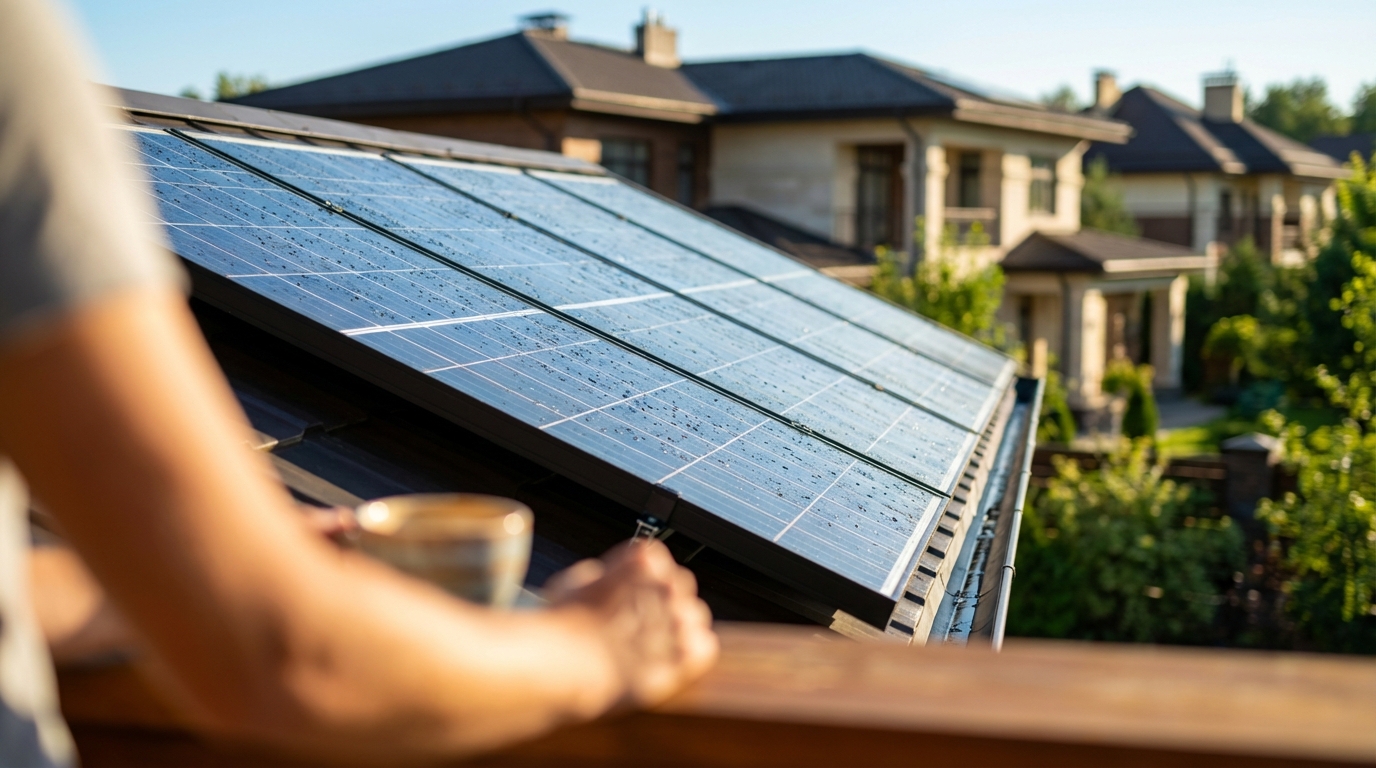

Best Solar Panels for Home Use in 2026 (Ranked by Efficiency, Warranty & Value)
The best solar panels for most homeowners in 2026 are the REC Alpha Pure-R Series for overall quality, the Canadian Solar HiHero for best value, and the Maxeon 7 for maximum efficiency at 24.1%. Panel technology has shifted almost entirely to N-type TOPCon and heterojunction (HJT) cells, pushing residential efficiencies above 22% across most major brands — a significant jump from the 19–20% PERC panels common just two years ago.
Key Takeaways
- Top overall pick: REC Alpha Pure-R — 22.3% efficiency, 25-year product warranty, excellent low-light performance, widely available through certified installers
- Best efficiency: Maxeon 7 — 24.1% efficiency (highest residential panel available), 40-year warranty, but premium pricing ($1.20–$1.50/W)
- Best value: Canadian Solar HiHero — 22.5% efficiency, competitive pricing ($0.70–$0.90/W), strong 25-year warranty
- Best warranty: Maxeon 7 at 40 years; REC and Silfab offer 25-year full product + performance warranties
- Technology shift: N-type TOPCon now dominates; avoid older PERC panels — they degrade faster and perform worse in heat
- Price range: $0.60–$1.50 per watt for panels alone; total installed system cost is $2.50–$3.50/W before the 30% federal tax credit
What’s in This Guide
2026 Solar Panel Rankings
These rankings are based on five weighted factors: efficiency (25%), warranty terms (20%), temperature coefficient (15%), real-world availability to U.S. homeowners (20%), and value per watt (20%). All panels listed use N-type cell technology unless noted.
1. REC Alpha Pure-R Series — Best Overall
REC’s Alpha Pure-R panels deliver 22.3% efficiency using heterojunction (HJT) cell technology with a gapless cell layout that eliminates dead space between cells. The temperature coefficient of -0.24%/°C is among the best available, meaning these panels lose less output in hot weather than nearly any competitor. REC backs them with a 25-year product, labor, and performance warranty — one of the most comprehensive in the industry.
What separates REC from the pack is consistency. They’ve been manufacturing solar panels since 1996, their defect rates are among the lowest in independent testing, and their certified installer network (REC ProTrust) gives homeowners a direct escalation path if warranty issues arise. Available in 405W and 430W residential models.
Best for: Homeowners who want premium quality without Maxeon’s premium price. Excellent in hot climates due to the low temperature coefficient.
2. Maxeon 7 — Highest Efficiency
The Maxeon 7 holds the residential efficiency record at 24.1%, using interdigitated back contact (IBC) cell technology — the same fundamental design that made SunPower panels legendary. After SunPower’s 2024 bankruptcy and restructuring, Maxeon (the original manufacturer) now sells directly. The 40-year product and performance warranty is the longest in the solar industry.
The tradeoff is price. Maxeon 7 panels cost 30–50% more per watt than comparable competitors. For homeowners with limited roof space who need maximum production from fewer panels, the efficiency premium often pays for itself. For large roofs with plenty of room, the math usually favors a less expensive panel.
Best for: Small roofs, maximum output per square foot, and homeowners who prioritize longevity over upfront cost.
3. Canadian Solar HiHero — Best Value
Canadian Solar’s HiHero series delivers 22.5% efficiency using N-type TOPCon technology at a price point that undercuts most premium brands by 15–30%. The company is one of the world’s largest panel manufacturers (founded in Canada, manufacturing in multiple countries), and their economies of scale translate to lower costs without sacrificing quality.
The HiHero comes with a 25-year product warranty and 30-year performance warranty guaranteeing at least 88.9% output at year 25. Temperature coefficient is -0.29%/°C — good but not class-leading. The main caveat is that Canadian Solar’s direct warranty support in the U.S. can be slower than companies like REC or Maxeon that have dedicated residential support teams.
Best for: Budget-conscious homeowners who want modern N-type efficiency without paying premium brand markup.
4. Qcells Q.TRON BLK-G11S — Best Mid-Range
Qcells (a Hanwha subsidiary) manufactures panels in Dalton, Georgia — one of the few companies making solar panels on U.S. soil. Their Q.TRON BLK series uses N-type TOPCon cells at 22.0% efficiency with a clean all-black aesthetic. The 25-year product warranty and -0.28%/°C temperature coefficient are competitive with the best in this price range.
The U.S. manufacturing angle matters beyond patriotism: panels made domestically qualify for additional Inflation Reduction Act (IRA) incentives, potentially adding $0.02–$0.07/W in tax benefits for your installer (which often gets passed through as a price discount). Qcells has strong retail availability through Home Depot’s solar program and a large certified installer network.
Best for: Homeowners who want U.S.-manufactured panels with strong local availability and solid mid-range performance.
5. LONGi Hi-MO X6 — Best Technology
LONGi is the world’s largest solar panel manufacturer by volume and a leader in HPBC (hybrid passivated back contact) cell technology. The Hi-MO X6 achieves 22.8% efficiency with a back-contact design that eliminates visible busbars from the front of the cell, improving both aesthetics and performance. The bifacial option can capture an additional 5–15% energy from reflected light on light-colored surfaces.
LONGi offers a 25-year product warranty and 30-year performance warranty. Their manufacturing scale means pricing is competitive ($0.65–$0.85/W). The primary concern for U.S. homeowners is the evolving trade policy landscape — tariffs on Chinese-manufactured panels can affect pricing and availability unpredictably.
Best for: Homeowners who want cutting-edge cell technology and don’t mind navigating potential supply chain variability.
6. Silfab SIL-490-BG — Best North American Made
Silfab manufactures in Burlington, Washington and Fort Mill, South Carolina using N-type TOPCon cells at 21.8% efficiency. What they lack in peak efficiency they make up for with one of the best warranty programs in the industry: 25-year product, labor, and performance warranty with a U.S.-based claims team. Their defect rates in independent testing are consistently among the lowest.
Silfab is smaller than the Asian giants, which means less retail availability but often better installer relationships and warranty responsiveness. If “buy American” matters to you and you want a company that’s genuinely manufacturing (not just assembling) in the U.S., Silfab is the strongest option.
Best for: Homeowners prioritizing U.S. manufacturing, warranty support quality, and long-term reliability over peak efficiency numbers.
7. Jinko Solar Tiger Neo — Best Budget Option
Jinko is the world’s second-largest panel manufacturer, and the Tiger Neo series delivers N-type TOPCon technology at the lowest price point of any panel on this list. At 22.3% efficiency with a 25-year product warranty, the specs compete with panels costing 20–40% more. Pricing starts around $0.55–$0.75/W.
The tradeoff is warranty support infrastructure. Jinko’s residential warranty claims process in the U.S. is less established than REC’s or Maxeon’s, and some homeowners report longer resolution times. For price-sensitive projects where upfront savings matter most, Jinko offers the best watts-per-dollar ratio available.
Best for: Large systems where total cost matters more than per-panel premium features, and homeowners comfortable with a less hands-on warranty experience.
Side-by-Side Comparison: Top Solar Panels 2026
| Brand & Model | Efficiency | Wattage | Cell Type | Temp Coeff. | Price/W (est.) | Product Warranty |
|---|---|---|---|---|---|---|
| REC Alpha Pure-R | 22.3% | 430W | HJT | -0.24%/°C | $0.90–$1.10 | 25 years |
| Maxeon 7 | 24.1% | 440W | IBC | -0.27%/°C | $1.20–$1.50 | 40 years |
| Canadian Solar HiHero | 22.5% | 440W | TOPCon | -0.29%/°C | $0.70–$0.90 | 25 years |
| Qcells Q.TRON BLK | 22.0% | 420W | TOPCon | -0.28%/°C | $0.80–$1.00 | 25 years |
| LONGi Hi-MO X6 | 22.8% | 445W | HPBC | -0.27%/°C | $0.65–$0.85 | 25 years |
| Silfab SIL-490-BG | 21.8% | 490W | TOPCon | -0.30%/°C | $0.85–$1.05 | 25 years |
| Jinko Tiger Neo | 22.3% | 440W | TOPCon | -0.29%/°C | $0.55–$0.75 | 25 years |
Most Efficient Solar Panels in 2026
Efficiency measures what percentage of sunlight hitting the panel gets converted to electricity. Higher efficiency means more power from less roof space. Here are the current leaders:
| Rank | Panel | Efficiency | Cell Technology | Key Advantage |
|---|---|---|---|---|
| 1 | Maxeon 7 | 24.1% | IBC | Highest residential efficiency; 40-year warranty |
| 2 | AIKO Comet | 23.6% | ABC | All-back-contact design; excellent shade performance |
| 3 | LONGi Hi-MO X6 | 22.8% | HPBC | Best price-to-efficiency ratio |
| 4 | Canadian Solar HiHero | 22.5% | TOPCon | High efficiency at budget-friendly price |
| 5 | REC Alpha Pure-R | 22.3% | HJT | Best temperature coefficient (-0.24%/°C) |
A practical note on efficiency: the difference between a 22% and 24% panel is about 9% more power from the same roof area. For a 20-panel system, that’s roughly 1.5–2 extra panels worth of production. On a large roof with plenty of space, you’ll likely save more money buying 22 budget panels than 20 premium ones. On a small roof where every square foot counts, high efficiency matters significantly.
Solar Panel Warranty Comparison
Solar panel warranties come in two parts: the product warranty (covers manufacturing defects and hardware failure) and the performance warranty (guarantees minimum power output over time). The best warranties cover both for 25+ years.
| Brand | Product Warranty | Performance Warranty | Degradation Rate | Labor Included? |
|---|---|---|---|---|
| Maxeon | 40 years | 40 years (88.3%) | 0.25%/yr | Yes |
| REC | 25 years | 25 years (92%) | 0.25%/yr | Yes (ProTrust) |
| Silfab | 25 years | 30 years (87.4%) | 0.40%/yr | Yes |
| Canadian Solar | 25 years | 30 years (88.9%) | 0.40%/yr | No |
| Qcells | 25 years | 25 years (86%) | 0.40%/yr | Yes |
| LONGi | 25 years | 30 years (88.9%) | 0.35%/yr | No |
| Jinko | 25 years | 30 years (87.4%) | 0.40%/yr | No |
Best Solar Panels on a Budget
If your priority is minimizing total system cost while still getting reliable, modern technology, these three brands offer the best watts per dollar:
Jinko Tiger Neo ($0.55–$0.75/W): The price leader with legitimate N-type TOPCon technology at 22.3% efficiency. You sacrifice warranty support quality for significant upfront savings. A 6 kW system using Jinko panels saves $900–$2,100 on panel costs alone versus REC or Maxeon.
LONGi Hi-MO X6 ($0.65–$0.85/W): Slightly more than Jinko but with cutting-edge HPBC technology and 22.8% efficiency. LONGi’s massive manufacturing scale (they produce more solar cells than anyone) keeps prices low. The bifacial option adds value for ground-mounted systems.
Canadian Solar HiHero ($0.70–$0.90/W): The sweet spot between budget and premium. Strong efficiency at 22.5%, a 30-year performance warranty, and a company with two decades of track record. If you’re spending $15,000–$25,000 on a solar system, the extra $500–$1,000 for Canadian Solar over Jinko buys meaningfully better warranty terms.
How to Choose the Right Solar Panel for Your Home
Picking a solar panel brand isn’t the most important decision in your solar journey — choosing the right installer matters more. But the panel choice does affect long-term production, aesthetics, and warranty protection. Here’s what actually matters:
Roof size determines your efficiency needs. If you have 400+ square feet of usable south-facing roof, efficiency differences between 21.5% and 24% panels rarely justify the cost premium. You can simply add one or two more budget panels to match the production of fewer premium panels. If your usable roof area is under 300 square feet, prioritize efficiency — every percentage point translates to meaningful production gains.
Climate affects which specs matter most. In hot climates (Arizona, Texas, Florida), the temperature coefficient is critical. A panel with -0.24%/°C loses significantly less output on 100°F+ days than one at -0.30%/°C. In cloudy or overcast climates (Pacific Northwest, Great Lakes), low-light performance and bifacial capability matter more than peak efficiency ratings.
Warranty quality varies more than warranty length. Almost every major brand now offers a 25-year product warranty, but the claims experience differs dramatically. REC’s ProTrust program and Maxeon’s direct support are considered industry-leading. Some budget brands require you to ship panels back to the manufacturer at your expense — a cost that can exceed the panel’s value.
Your installer’s panel access matters. Most residential installers work with 2–4 panel brands. Choosing a panel your installer regularly installs means they know the product, have stock on hand, and have an established relationship with the manufacturer’s warranty team. Requesting an unusual brand often means longer lead times and higher markup.
Aesthetics are personal but practical. All-black panels (black cells, black frame, black backsheet) look cleaner on most roofs but cost 5–10% more. If your HOA has solar panel appearance requirements or your system faces the street, the aesthetic upgrade is worth considering.
Solar Panel Technology: TOPCon vs. HJT vs. PERC
Solar cell technology has shifted rapidly since 2023. Understanding the three main types helps you evaluate what you’re being offered:
TOPCon (Tunnel Oxide Passivated Contact): The current mainstream technology. TOPCon cells use an ultra-thin oxide layer to reduce electron recombination at the cell surface, pushing efficiencies to 22–23%. Most panels from Canadian Solar, Qcells, Jinko, Trina, and JA Solar now use TOPCon. Manufacturing costs are low because existing PERC production lines can be upgraded to TOPCon with relatively modest investment. This is what you’ll likely be offered by most installers.
HJT (Heterojunction Technology): Used by REC, Meyer Burger, and some LONGi models. HJT layers amorphous silicon on crystalline silicon, creating a cell with excellent temperature coefficients (-0.24% to -0.26%/°C) and very low degradation rates. The downside is higher manufacturing cost, which translates to premium pricing. HJT panels perform best in hot climates where the temperature coefficient advantage compounds over decades.
IBC/ABC (Interdigitated/All-Back Contact): Used by Maxeon, AIKO, and LONGi’s HPBC line. All electrical contacts are moved to the back of the cell, eliminating front-side shading from busbars. This achieves the highest efficiencies (23–24%+) and the cleanest aesthetics. Manufacturing is more complex and expensive, making these premium products.
PERC (Passivated Emitter Rear Cell): The previous-generation technology, now being phased out. PERC panels max out around 21% efficiency and degrade faster than N-type alternatives. If an installer offers you PERC panels in 2026, they’re likely clearing old inventory. There’s nothing wrong with PERC panels at the right price, but don’t pay current market rates for last-generation technology.
Solar Panel Brands to Watch Out For
Not all solar panels are created equal. A few warning signs that a brand may not be worth your investment:
Unknown or white-label brands: Some installers sell rebranded panels from no-name manufacturers under their own label. These panels may work fine initially but warranty claims become impossible if the installer goes out of business. Always ask for the actual manufacturer name and verify they have a U.S. warranty presence.
Brands with recent financial instability: The solar manufacturing industry is volatile. Companies that have recently restructured, been acquired, or announced significant losses may not be around in 10 years to honor a 25-year warranty. Research the manufacturer’s financial health before committing.
Dramatically underpriced panels: If a panel is priced 40–50% below comparable competitors, question why. It may be older PERC inventory, a brand dumping panels to generate cash flow, or panels that failed quality inspection at a Tier 1 factory and were sold to a secondary brand. Cheap panels can cost more in the long run through lower production and shorter lifespan.
Any panel still using P-type PERC in 2026: The industry has moved to N-type. PERC panels degrade approximately 0.5–0.7% per year compared to 0.25–0.4% for N-type. Over 25 years, that difference means 5–8% less cumulative energy production. Unless you’re getting PERC panels at a substantial discount (30%+ below N-type pricing), they’re not worth considering.
Find Top-Rated Solar Installers Near You
Compare quotes from pre-screened solar companies. See which panel brands they carry, read customer reviews, and get the best price for your system.
Frequently Asked Questions
What is the best solar panel brand in 2026?
REC is the best overall solar panel brand for most homeowners in 2026. Their Alpha Pure-R series combines 22.3% efficiency, an industry-leading temperature coefficient (-0.24%/°C), a comprehensive 25-year product and labor warranty, and strong U.S. support infrastructure. For maximum efficiency regardless of price, Maxeon 7 leads at 24.1%. For best value, Canadian Solar’s HiHero series offers 22.5% efficiency at 15–30% lower cost than premium brands.
What are the most efficient solar panels available?
The most efficient residential solar panels in 2026 are: Maxeon 7 at 24.1% (IBC cells), AIKO Comet at 23.6% (ABC cells), LONGi Hi-MO X6 at 22.8% (HPBC cells), Canadian Solar HiHero at 22.5% (TOPCon), and REC Alpha Pure-R at 22.3% (HJT). For context, the average panel sold in the U.S. is now around 21.5–22%, up from 19–20% just two years ago due to the industry’s transition from PERC to N-type cell technology.
How much do solar panels cost per watt in 2026?
Solar panels alone cost $0.55–$1.50 per watt in 2026, depending on brand and technology. Budget N-type panels (Jinko, Trina) run $0.55–$0.75/W. Mid-range panels (Qcells, Canadian Solar) cost $0.70–$1.00/W. Premium panels (REC, Maxeon) range from $0.90–$1.50/W. Total installed system cost including inverters, racking, labor, and permitting is $2.50–$3.50/W before the 30% federal tax credit. For a complete breakdown of solar panel costs, see our detailed guide.
Are expensive solar panels worth it?
Premium solar panels are worth it in two scenarios: when roof space is limited (higher efficiency means more power from fewer panels) and in hot climates (better temperature coefficients mean less production loss on hot days). For a typical installation with adequate roof space in a moderate climate, mid-range panels like the Canadian Solar HiHero or Qcells Q.TRON offer the best return on investment — you get 95% of premium panel performance at 70–80% of the cost.
What is the difference between TOPCon and PERC solar panels?
TOPCon (Tunnel Oxide Passivated Contact) uses N-type silicon with a thin oxide layer that reduces energy loss, achieving 22–23% efficiency. PERC (Passivated Emitter Rear Cell) uses older P-type silicon, maxing out around 21% efficiency. TOPCon panels degrade slower (0.3–0.4%/year vs. 0.5–0.7%/year for PERC), perform better in heat and low light, and produce 5–8% more total energy over 25 years. In 2026, TOPCon has largely replaced PERC as the industry standard.
How long do solar panels last?
Modern solar panels are designed to last 30–40+ years. Most manufacturers guarantee at least 85–92% of original output at year 25 under their performance warranty. Real-world data from panels installed in the 1990s shows many still producing at 80%+ capacity after 30 years. The panels themselves rarely fail outright — degradation is gradual, typically 0.25–0.5% per year. Inverters usually need replacement at 12–15 years (string inverters) or 25 years (microinverters), which is the more common maintenance expense.
Should I buy solar panels or lease them?
Buying solar panels (with cash or a solar loan) almost always provides a better financial return than leasing. When you buy, you own the system, claim the 30% federal tax credit, and keep all the energy savings. With a lease or PPA, the leasing company claims the tax credit and owns the equipment — you pay a monthly fee that’s typically lower than your utility bill but higher than what you’d pay on a loan for owned panels. Buying also adds more to your home’s resale value, since owned systems transfer cleanly while leases can complicate sales.
Do solar panels work in cloudy weather?
Yes, solar panels produce electricity on cloudy days — just less of it. On an overcast day, panels typically generate 10–30% of their rated output depending on cloud thickness. Completely overcast conditions reduce output more than partly cloudy skies. Cities like Seattle and Portland still have thriving solar markets because annual production depends on total yearly sunlight hours, not just sunny days. Germany, which gets less sun than most U.S. states, is one of the world’s top solar markets. Panels with strong low-light performance (like REC’s HJT panels) produce comparatively more in cloudy conditions.
Related Guides
- How Much Do Solar Panels Cost in 2026? — complete pricing breakdown by system size
- How Many Solar Panels Do I Need? — calculate the right system size for your home
- Solar Panel ROI: Is It Worth the Investment? — payback period and lifetime savings analysis
- Federal Solar Tax Credit Guide 2026 — how to claim the 30% ITC
- How to Clean Solar Panels — maintenance tips to keep production high